Turkish Military Helicopters - For its long-range interdiction capability, Turkey has acquired the F-100 Super Saber from its NATO ally since 1958. This single engine fighter jet with its distinctive 'squished' inlet and 45 degree swept wings formed the backbone of the TurAF until the early 1980s.
The book will be a fascinating item: an essential addition to the library of anyone with an interest in the world of high-flying fighter aircraft, featuring superb photography and many new world-class illustrations. It is hard to believe that units were operating Focke-Wulf 190s and Spitfires together in the 1940s, but the history of the Turkish air force is full of such incredible events.
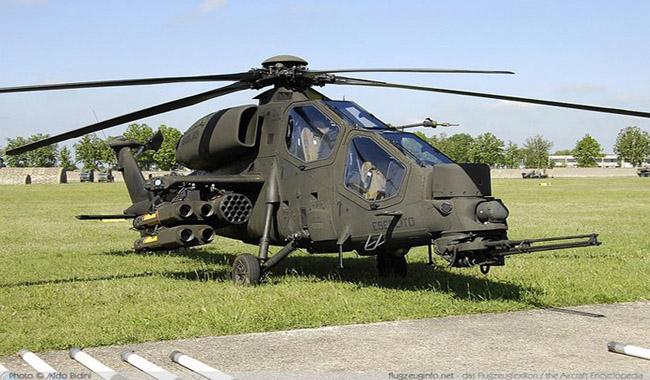
Turkish Military Helicopters
 Source: rare-gallery.com
Founded in 1911, the independent air force of Turkey (then the Ottoman Empire) is one of the oldest in the world. The country's unique geographic position, strategic relationships and alliances have a major impact on the inventory, doctrine and organization of the Turkish Air Force.
Biden Scholz To Huddle On Ukraine War At White House
Operated some extremely exciting types and one of the last operators of the legendary F-4 Phantom II. We look at ten types that define this great and impressive air force. Turkish Aerospace (TA) is currently working on three important manned aircraft projects, on the other hand.
The first is the Hurkus, a turboprop trainer comparable to the Super Tucano and T-6 Texan II. The Hurkus is currently being evaluated by TurAF training squadrons and is expected to be accepted soon. TA is also working on a close air support variant of the Hurkus, named Hurkus C. Another important project is the Hurjet, a single turbofan trainer / fighter jet to replace the T-38M
Ari (locally improved T-38 Talon). In the 1980s, many F-104Gs became available from NATO allies due to the arrival of the F-16 and other new types. Turkey used this opportunity to strengthen its Starfighter fleet, and many used F-104s were delivered in the 1980s.
The US Embassy offers its sincere condolences to the Turkish soldiers killed and injured in the tragic helicopter crash in #Bitlis. Our thoughts are with the families of all those affected, and we wish a speedy recovery to those injured.
@tcsavunma The TurAF took a total of 270 F-100D, F-100F and F-100C Super Sabres, receiving the last one in 1982. About 250 of them came from the United States, and the rest from Denmark. The Super Saber saw extensive service during Operation Cyprus 1974. The last airworthy 'Huns' were finally retired in 1988, giving way to the more modern F-16.
Turkey was neutral during World War II - and took a cautious approach to both sides to keep it that way. This delicate balance resulted in the acquisition of equipment and weapons by both sides of the war.
 Source: www.thenews.com.pk
In the final stages of the conflict, Turkey declared war on Nazi Germany and became part of the Allies, paving the way for the TurAF to be equipped with numerous US and British-made aircraft as military aid.
Since its inception, the TurAF has operated a large number of combat and support aircraft of various origins. Most of these are produced locally and since the 2000s, indigenous designs have entered service, such as the Anka-S unmanned aerial vehicle and the Hurkus-B turboprop trainer.
Below is a list of 10 of the most important types to be served. The F-84 formed the backbone of the TurAF during the 1950s and 1960s. The aircraft saw service during the Cyprus crisis of 1963-64.
The RF-84 was also at the front during the 1974 Cyprus operation. The F-84G was retired in 1966 while the last RF-84F was in service until the early 1980s. Shortly after the T-33, the TurAF began receiving the Republic F-84 Thunderjet, a single-engine fighter jet.
Turkey operates the largest F-84 fleet (of all versions) in the world after the United States: between 479 F-84G were delivered between 1952 and 1956 as well as 377 F-84F, F-84Q and RF-84F between 1956 and 1966. Known as 'Baba' (father) by Turkish pilots, ground staff and enthusiasts, the McDonnell Douglas F-4E Phantom is perhaps the most revered fighter aircraft
that ever flies in Turkish skies. Many in Turkey were made with the characteristic hull of the J79 Phantom engine which is powerful and looks terrific. After a failed attempt to purchase 40 Panavia Tornadoes from the United Kingdom in 1986, Turkey began to look for alternative solutions to increase its deep strike and interdiction capabilities.
Delayed by the economy, the program finally got underway in the mid-1990s. A contract for the extensive avionics and structural modernization of 54 F-4E has been signed with Israel's IAI. The aircraft, designated Terminator F-4E 2020, is equipped with new radar, avionics and electronic warfare systems as well as precision strike missile capabilities with Popeye I. The
all remaining recce versions, which were partially updated locally in the Isik program (light) were retired in 2015. Some F-4Es not subject to the Terminator program received avionics upgrades in 'Simsek' ("lightning"). project in the early 2000s, but withdrew soon after.
 Source: www.savunmahaber.com
The ghosts are now 111 Squadron and 401 Test and Evaluation Squadron, both at Eskisehir. In total, Turkey received 236 Phantoms. A Cougar helicopter crashed near the village of Cekmece, near the city of Tatvan, in the largely Kurdish province of Bitlis.
He was on his way to Tatvan from the province near Bingol when authorities lost contact with him at 2:25pm (11:25 GMT), the ministry said. The Lockheed T-33 Shooting Star, a single-engine subsonic trainer, was the TurAF's first jet aircraft.
The first example was delivered in December 1951. In total, 116 T-33A and 58 T-33AN (Canadian CT-133 Silver Star Mk3) entered service. 25 RT-33As also flew for a time to train tactical reconnaissance pilots, but the aircraft was underpowered and out of favor.
The Shooting Star is mainly used for the initial training of jet pilots but also works with liaison missions between air bases around Turkey. The last aircraft were finally retired in 1997. Block 40 and Block 50 F-16 aircraft received extensive avionics upgrades under the Peace Onyx III program.
Turkey has also started an indigenous avionics upgrade project called 'Ozgur' for Block 30 F-16. This fighter is equipped with an indigenous mission computer, friend or foe identification and cockpit avionics. Turkey ordered 30 Block 50+ F-16 in 2007 as an attrition replacement and to fill a gap in the Peace Onyx IV.
Equipped with a Conformal Fuel Tank (CFT), the aircraft was delivered between 2011 and 2012. In total, Turkey received 433 F-104G, TF-104G, F-104S and CF-104 between 1963 and 1989. CF-104 used for close air support in the 1980s against PKK targets, aircraft fire control.
the found system is also suitable for the ground attack role. The last Starfighters were retired in 1995. The Hush-Kit Book of warplanes is a beautifully designed highly visual collection of the best articles from the fascinating world of military aviation - handpicked from the highly acclaimed online magazine Hush-kit (and mixed with
-punch exclusive new material). It is packed with a feast of material, ranging from interviews with fighter pilots (including the British Electric Lightning, stealth F-35B and Mach 3 MiG-25 'Foxbat'), to satire, expert historical analysis, the

-top 10 and all the way. . of aeronautics, from a site described as: The initial contract included 160 F-16C/D Block 30 and Block 40 Fighting Falcons, under the Peace Onyx I project. These aircraft were delivered between 1987 and 1994
. The follow-up contract, Peace Onyx II, covered 80 Block 50 F-16s. This second batch was partially financed by Saudi Arabia, Kuwait, and the United Arab Emirates as compensation for Turkey's support in Operation Desert Storm.
The Peace Onyx II fighter entered service between 1996 and 1997. Turkey has made significant achievements since the early 2000s and the country has reaped the fruits of large investments in the aerospace sector. One of the clearest results of these efforts is in the field of unmanned aerial vehicles, as shown in the latest Operation Spring Shield against the forces of the Syrian regime where the Anka-S and Bayraktar drones
Locally developed TB2s wreaked havoc on Syria's air and mechanized defense units. The US arms embargo that lasted between 1975 and 1978 led Turkey to look for alternative sources of fighter jets. Under the weight of the financial crisis, Turkey could not switch to a different source and ended up making an agreement with Italy for 40 F-104S.
The Northrop F-5A Freedom Fighter, a twin-engine day fighter, entered TurAF service in 1966, replacing the F-84 Thunderjet. The F-5 will be the mainstay of the TuAF interceptor and multi-role capability. A total of 171 F-5A and F-5B, as well as 41 RF-5A tactical reconnaissance jets, were delivered between 1995 and 1992.
Turkey bought some used F-5s from Libya, during the US arms embargo (along with a generous package of spare parts) provided by Muammar Gaddafi, who is sympathetic to Turkey. The F-5 is another veteran of the 1974 Cyprus operation.
After the US embargo was lifted in 1978, Turkey continued its efforts to modernize its air force, as well as establish an indigenous aviation industry. The bid for the new fighter plane selected two US designs: the F-16 and the F/A-18.
In 1983, the F-16 was selected. For the production of the aircraft, a joint venture was formed between TUSAS (Turk Ucak Sanayii AS - Turkish Aircraft Industries) and General Dynamics under the name TUSAS Aerospace Industries (TAI).

To create the F110 turbofan engine, TUSAS partnered with General Electric, to create TUSAS Engine Industries (TEI). Arda Mevlutoglu is an astronautical engineer. He currently works as VP of an international trading and consulting company, focusing on the defense and aerospace sectors.
He currently works as Vice President of Defense Programs at an international trading and consulting firm. His research focuses on defense industry technology, policy and geopolitical assessment, with an emphasis on the Eastern Mediterranean and Black Sea regions.
His works have been published in various local and international journals such as Air Forces Monthly, Air International, Combat Aircraft, EurasiaCritic, ORSAM Middle East Analysis. He has been quoted by the Financial Times, Reuters, BBC, Al Monitor, CNN Turk and TRT on issues involving Turkey's defense industry and military development.
The Ottoman Empire, Turkey's predecessor, entered the First World War in 1914 as an ally of Germany and had received technical support, training equipment - including a large force of Albatros fighters - during the war.
After the war, the Ottoman Empire surrendered. The capital was occupied, and the army was disbanded. Later, the Greek army began an invasion of Anatolia, capturing a large part of the land up to Ankara. The war for independence began with the leadership of Mustafa Kemal, who later became the founder of the Republic of Turkey.
The Turkish Air Force, which at the time was a small collection of captured or smuggled aircraft, played an important role in the War of Independence which had previously formed important artillery detection and reconnaissance missions.
To combat the threat of Soviet high-altitude bombers, Turkey, like Greece, purchased F-102A Delta Dagger interceptors from the United States. The Delta Dagger, a supersonic delta wing interceptor was the first, and to date the only, delta wing fighter operated by the TurAF.
After Greece, Turkey signed a contract for 40 F-4Es in 1973. Delivery of the aircraft, under the 'Peace Diamond' programme, began in August of the following year but was halted by another US arms embargo. Deliveries continued in 1978 with another contract for another 40 aircraft under the Peace Diamond II.
 Source: cdn.kurdistan24.net
To bolster its Phantom fleet, Turkey acquired many used examples from the United States during the 1980s. After the 1991 Gulf War, Turkey also received RF-4Es from Germany, as well as some F-4Es from the US stock.
"We express our deep sorrow in Turkey for the loss of nine military personnel in Bitlis," said Turkey's ambassador to the EU Nikolaus Meyer-Landrut, whose bloc will review relations with Ankara at a summit in Brussels later this month.
During the Second World War, Germany sought good relations with Turkey to ensure supplies of important raw materials such as iron, chromium and manganese. As part of this bilateral relationship, Turkey is negotiating with Germany for Focke-Wulf Fw 190 fighters. A credit agreement was signed in September 1942 and a total of 72 Fw 190A-3 fighters were delivered between March and
August 1943. The country's entry into NATO in 1952 marked an important step for the service. Hundreds of fighter jets and trainers are arriving in the country from the United States and other Western allies, as Turkey has become a bulwark against the Soviet Union and the Warsaw Pact.
Since the early 1980s, Turkey has been fighting separatist terrorism inside and outside its borders. The TurAF has been very active for the last four decades with close air support missions - and the recent situation in Syria has led to an increase in ground attacks and missions of
' air patrol (CAP) by F-16 fighters. The export version of the PZL.11, the all-metal gullwing monoplane PZL.24 was first made in 1933. It became an export success, having entered service with the Bulgarian, Greek, Romanian air forces in numbers.
The initial Turkish contract guarantees 14 PZL.24A which, to be assembled in Kayseri Tayyare Fabrikasi (KTF - Kayseri Aircraft Planet), one of the first aircraft factories in Turkey. The PZL project is an important achievement for Turkey's fledgling aviation industry.
In the 1930s, with the help of Polish and German aviation engineers who fled to Turkey from the Nazis, Germany helped Turkey build its aviation industry. The same is true for many other scientific and industrial fields.
German Chancellor Olaf Scholz visited the White House on Friday for a private meeting with President Joe Biden as the two allies grew increasingly concerned over concerns that China could go back and provide weapons to the
Russia for its invasion of Ukraine. This copy is for personal, non-commercial use only. Distribution and use of this material is governed by the Customer Agreement and copyright laws. For non-personal use or to order multiple copies, contact Dow Jones Reprints at 1-800-843-0008 or visit www.djreprints.com.
t129 helicopter, t129b atak helicopters, turkey attack helicopter, atak helicopter turkey, turkey air force, t129b atak, turkish attack helicopter, t129 helos